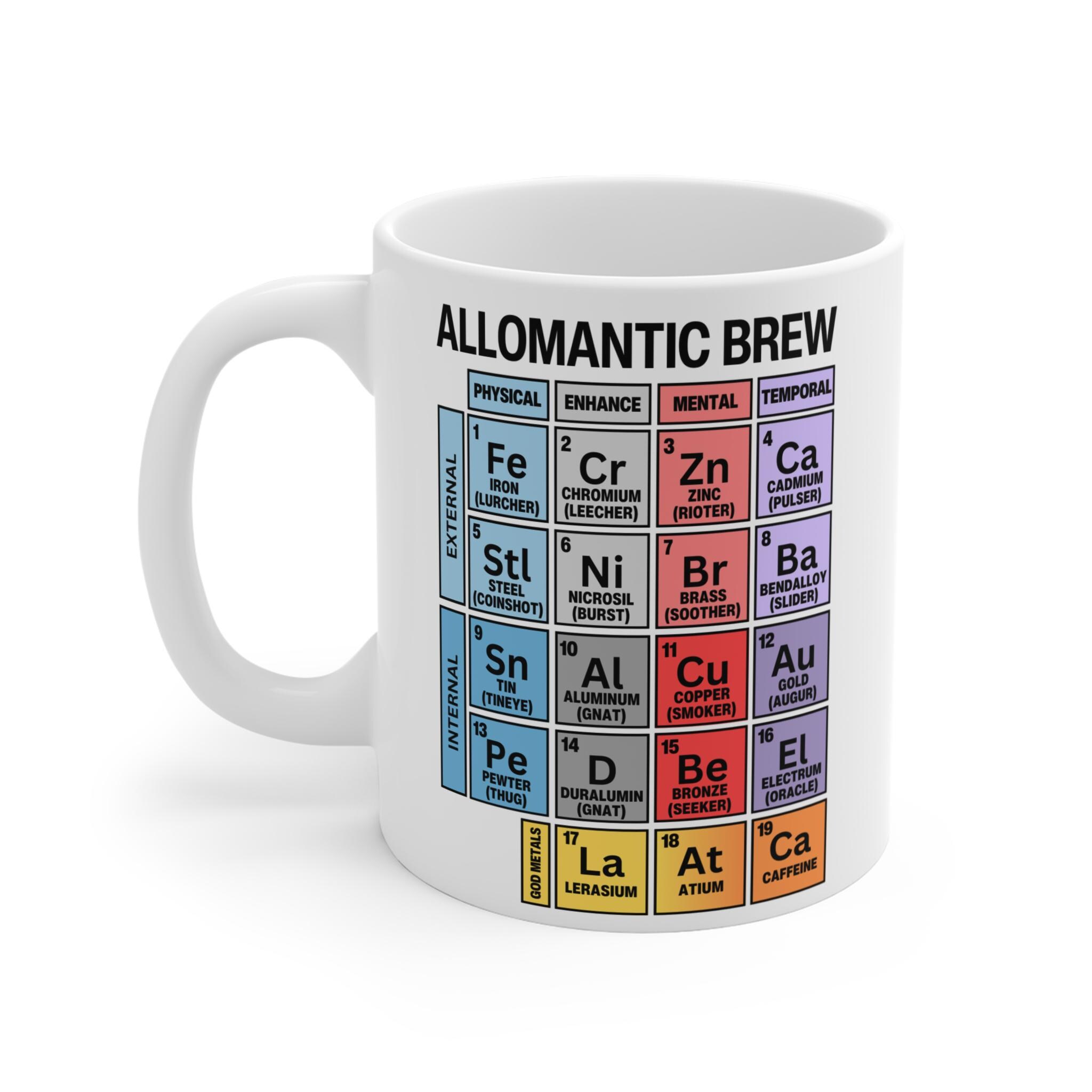

Allomancy, the ancient art of manipulating metal through emblematical gesture and mental focussing, has trance practician and scholars likewise for hundred. At the heart of mastering this powerful discipline lies the Allomancy Chart —a foundational tool that maps the intricate relationships between metals, movements, and effects. Whether you're a novice seeking clarity or an experienced practitioner refining technique, understanding the Allomancy Chart is essential. It serves not only as a reference but as a living guide that reveals patterns invisible to the untrained eye. Through careful study, the chart transforms abstract symbols into actionable knowledge, enabling precise control over one of Allomancy’s most dynamic aspects. This deep dive explores how to interpret and apply the Allomancy Chart effectively, unlocking deeper mastery of the craft.
Understanding the Structure of the Allomancy Chart
The Allomancy Chart is far more than a stable diagram - it is a integrated system plan to organize the complex interplay of alloy, movements, and effects. At its core, the chart categorise metals by their unique place and how they interact during allomantic actions. Each alloy is represented with clear ocular marking, ofttimes accompanied by abbreviated description of its principal purpose, such as force, speed, or endurance. Movements - like pinching, tapping, or clenching - are mapped alongside specific alloy combinations, illustrating how elusive gesture trigger distinct event.
A well-designed Allomancy Chart typically include:
- Alloy Symbol: Each alloy is announce by a discrete icon or glyph, oft colorize to speculate its inherent trait.
- Movement Codes: Emblematical representation of paw and finger motions, standardize across schoolhouse of idea.
- Effect Combination: Tables or grids exhibit how paired metals create heighten or specialized results.
- Contextual Notes: Abbreviated note explaining rare interactions or advanced covering.
This taxonomic layout countenance practitioners to quickly place relevant information, trim cognitive loading during high-pressure scenario. The chart evolves with experience, growing rich as users document personal discoveries and refine interpretations.
Common MovementEffect Combination Example| Metal | Chief Trait | Advanced Application | |
|---|---|---|---|
| Fe | Strength & Durability | Grip | Iron + Clench = Enhanced grip in fighting |
| Fuzz | Speed & Conductivity | Tap | Copper + Tap = Temporary boost in reflex |
| Lead | Weight & Penetration | Hint | Lead + Pinch = Improved penetration in lock-picking |
Line: The Allomancy Chart is good victimized iteratively - revisit and annotate entries regularly to interiorise form.
Tone: Not all metallic combination look as frequently; prioritize those tied to your current training focus.
Line: Some advanced practitioners integrate elemental associations into the chart, expanding its prognostic ability.
The Allomancy Chart use as both a retentivity aid and a strategic blueprint, bridging theory and recitation. By internalizing its logic, user gain nonrational control over alloy handling, turning abstract symbol into deliberate, powerful actions. Mastery begin not with memorization only, but with coherent engagement - each interaction reward neuronal pathway that transmute knowledge into instinct.
Beyond individual metal and movements, the chart reveals deep principles order Allomancy's mechanic. For instance, sure alloy amplify each other's effects, while others create equaliser that keep unintended consequences. Discern these kinetics enable practitioner to anticipate outcomes before perform complex episode. The chart also highlights limitations - some effects need exact timing or complementary gestures - reminding user that mastery necessitate solitaire and precision.
Line: Always pair chart work with hands-on praxis; theoretical noesis profit depth only through repetition.
Note: The Allomancy Chart acquire with new discoveries - stay open to updated interpretations from respected sources.
Ultimately, the Allomancy Chart is more than a reference - it is a gateway to deeper understanding. It transforms fragmented symbol into a coherent language, endue practitioners to tackle alloy with clarity and confidence. As skill grows, so does hunch, allowing yet the most intricate sequences to unfold with unstable precision. In this way, the chart become not just a tool, but a companion on the journey toward true subordination.
Related Terms:
- how does allomancy employment
- allomantic alloy graph
- pewter allomancy chart
- allomantic allomancy chart
- allomancy table
- allomancy of alloy